
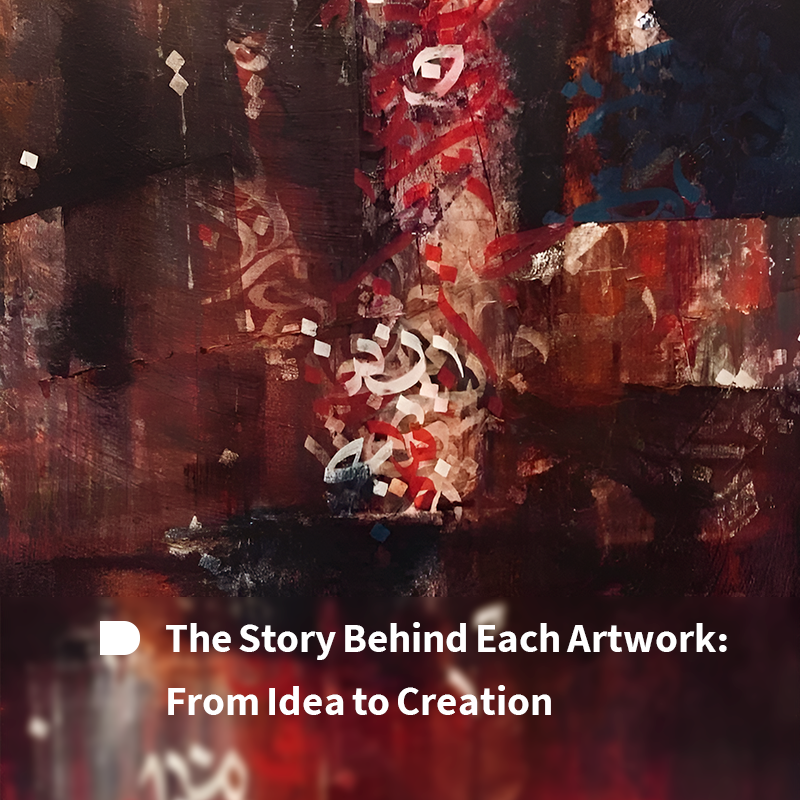
The Story Behind Each Artwork: From Idea to Creation
The Story Behind Each Artwork: From Idea to Creation
Every handmade product is a story before it becomes a tangible object. A story that begins in the artist’s mind, takes shape through experience and emotion, and is ultimately brought to life as a real creation.
Unlike mass-produced products, handicrafts are the result of a human journey; a journey filled with choices, uncertainty, experimentation, and a passion for creating. When we look at a handmade piece, we are actually witnessing the result of a journey that began with an idea and ended with creation.
The Beginning; The Spark of an Idea
An idea is the first and most important stage in the birth of a handmade product. This idea can come from anywhere; a personal memory, nature, a historical pattern, a conversation, or even a passing emotion.
At this stage, the artist does not create yet. Instead, they observe, reflect, and imagine.
In the artist’s mind, an idea often appears as an image, a feeling, or a concept. Sometimes this image is clear, and sometimes it is uncertain. What truly matters is the emotional connection between the artist and the idea. Without this connection, the creative journey cannot continue.
An idea is the emotional core of a product; something that the audience can later feel, even if they cannot clearly explain it.
Inspiration; The Connection Between the Mind and the Outside World
Inspiration is the stage that nurtures and develops the initial idea. At this point, the artist observes the world around them—nature, architecture, culture, traditional objects, colors, and textures.
In Iranian handicrafts, inspiration often comes from heritage, historical motifs, and natural elements. However, inspiration is not imitation; it is a dialogue between the past and the artist’s personal perspective.
Inspiration allows the artist to expand the original idea and give it greater depth. During this stage, the artist decides what emotion the artwork should convey and what experience the viewer should have when seeing or touching it.
These decisions later appear through the design, colors, and form of the artwork.
Design; The Formation of a Visual Language
After the idea and inspiration have developed, the design process begins. Design is the translation of an idea from the artist’s mind into a visual language.
At this stage, the artist determines the form, proportions, patterns, and overall structure of the piece. Design may appear on paper or exist only in the artist’s imagination, but in either case, it becomes the roadmap for creating the final product.
In handicrafts, design plays a crucial role because every small decision can influence the final result. Choosing whether patterns should be simple or complex, whether forms should be soft or structured, and how colors should interact are all essential parts of this process.
A well-designed piece has harmony and communicates its message effectively.
Choosing Materials; A Dialogue with the Medium
Every material has its own character and limitations. Clay, wood, metal, fabric, and pigments each behave differently, and the artist must understand their nature.
Choosing the right material is one of the most sensitive stages of creation because it directly affects the quality, durability, and final feeling of the artwork.
In handicrafts, materials are not merely raw elements; they are partners in the creative process. Artists learn to communicate with the material, understand its qualities, and discover its potential.
This relationship between the artist’s hands and the material is what gives handmade products their unique and living character.
The Beginning of Creation; Turning an Idea into Reality
The making process is where an idea leaves the artist’s mind and enters the physical world. This stage requires concentration, skill, patience, and experience.
Every movement of the hand, every stroke, and every small adjustment can influence the final outcome. Unlike industrial production, nothing in this process is completely predictable.
During creation, artists often face unexpected challenges. Sometimes the material reacts differently than expected, and sometimes the final result differs from the original vision.
These moments are a natural part of the creative journey and often lead to artistic growth and learning.
Mistakes and Adjustments; A Part of Beauty
One of the most important differences between handmade products and mass-produced items is the presence of human imperfections.
These imperfections are not weaknesses; they are part of the identity and character of the artwork. In many cases, small variations give a piece its unique personality.
The process of refinement in handicrafts requires attention, flexibility, and experience. The artist decides where changes are needed and where the natural result should be embraced.
These decisions reflect artistic maturity and expertise.
Final Touches; Reaching Perfection Through Details
After the main structure of the artwork is complete, the final finishing process begins. This stage includes refining details, completing surfaces, adding final colors or patterns, and preparing the piece for presentation.
The finishing stage is where the artwork’s identity becomes complete.
At this point, the artist pays closer attention to details than ever before. Even the smallest adjustment can have a significant impact on the final impression of the piece.
This attention to detail is one of the defining qualities of handmade artworks.
The Birth of the Product; The Moment of Release
The moment when the artist considers the work complete is truly special. The product is no longer only an idea belonging to the artist’s mind; it is now ready to enter the life of its new owner.
This moment carries a mixture of satisfaction, attachment, and release.
From this point forward, the artwork continues its own story with its audience. Every person who sees or touches it becomes part of that story and adds their own personal interpretation.
The Role of Story in the Value of a Product
Story is one of the most important elements in valuing handicrafts. When audiences understand how a piece was created and the vision behind it, they develop a deeper connection with the artwork.
This connection increases the emotional and spiritual value of the product.
For artistic brands, sharing the stories behind their creations helps build trust and loyalty. The audience feels that they are becoming part of a human journey, not simply making a purchase.
Handmade Products; Beyond an Object
Handmade products are not merely objects for use or decoration. They carry time, experience, and emotion.
Every piece is the result of hours of work, thought, and artistic decisions. When such an artwork enters our lives, it brings a part of that journey with it.
In a world dominated by speed and mass production, handmade creations remind us of the value of patience, attention, and meaning.
Conclusion
The story behind every handmade product is a journey from idea to creation; a human journey filled with emotion, experience, and meaning.
Understanding this process helps us recognize the true value of handicrafts and appreciate them from a deeper perspective.
For an artistic brand, sharing these stories is not only a part of its identity but also a bridge between the artist and the audience—a bridge built on trust, respect, and a passion for art.


