
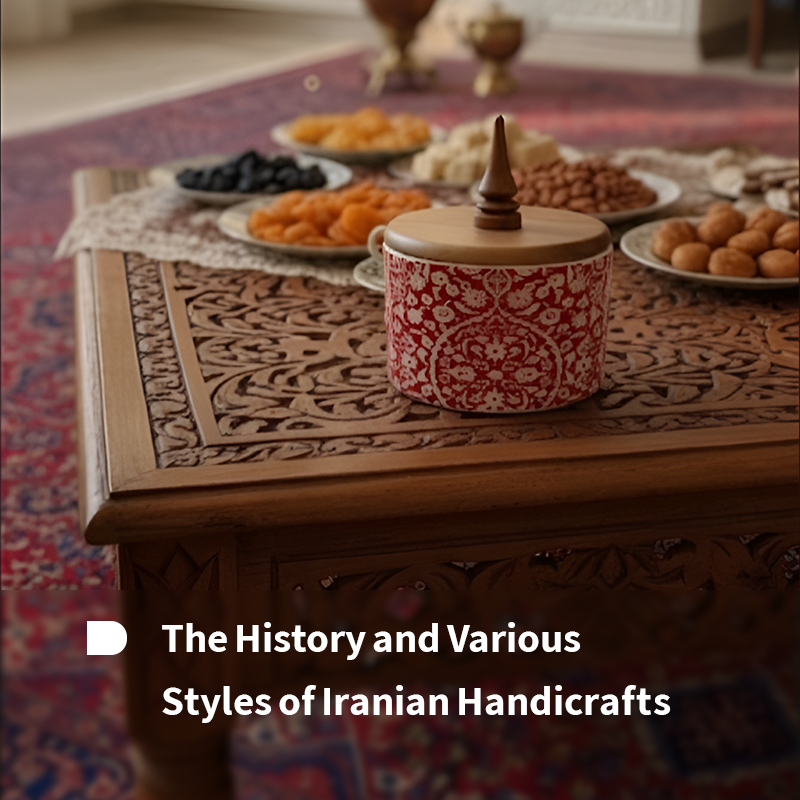
The History and Various Styles of Iranian Handicrafts
The History and Various Styles of Iranian Handicrafts
Iranian handicrafts are among the most authentic expressions of the culture and art of this land. An art form deeply rooted in the daily lives of its people, Iranian handicrafts have evolved over thousands of years alongside the social, cultural, and historical transformations of Iran.
Each handcrafted piece is not merely a decorative or functional object; it is a reflection of the identity, beliefs, and aesthetic vision of the people who created it. Understanding the history and various styles of Iranian handicrafts helps us gain a deeper appreciation of this art and recognize its true value.
The Ancient Roots of Handicrafts in Iran
The origins of handicrafts in Iran date back to prehistoric times, when early humans began creating simple tools and objects from clay, stone, and natural fibers to meet their daily needs. Although these objects were simple, they already reflected artistic creativity and a desire for beauty.
With the emergence of early civilizations on the Iranian plateau, handicrafts gradually became more developed and structured. Pottery, weaving, and metalworking were among the first artistic practices that combined practical functions with decorative elements. This period can be considered the beginning of the relationship between art and everyday life in Iranian culture.
Handicrafts During the Achaemenid Era and the Glory of the Persian Empire
During the Achaemenid period, Iranian handicrafts reached an advanced and organized level. Metalwork, stone carving, textile production, and decorative objects were created with remarkable precision and craftsmanship.
The use of motifs inspired by nature, mythical creatures, and symbols of power gave the artworks of this era a magnificent and prestigious identity.
During this period, handicrafts were not only produced for everyday use but also served as a way to represent the power, culture, and artistic achievements of the Persian Empire to other civilizations. This helped Iranian art influence neighboring cultures.
The Parthian and Sassanian Periods; The Peak of Refinement and Symbolism
During the Parthian and Sassanian eras, Iranian handicrafts entered a new stage of artistic development. Exquisite metalwork, gold and silver vessels, luxurious textiles, and complex decorative designs became widespread.
The motifs of this period often carried symbolic and mythological meanings, representing concepts such as power, eternity, and spirituality.
During this era, design and aesthetics became increasingly important, and handicrafts moved beyond purely functional objects. The artworks of this period demonstrate the exceptional mastery of Iranian artists in technique, form, and meaning.
The Transformation of Handicrafts After the Arrival of Islam
The arrival of Islam in Iran marked a major turning point in the history of Iranian art and handicrafts. Islamic concepts such as harmony, repetition, unity, and abstraction had a profound influence on Iranian artistic styles.
Geometric patterns, Eslimi motifs, and calligraphy became important decorative elements in many handicrafts.
During this period, arts such as tilework, stucco decoration, illumination, and manuscript art flourished. Handicrafts became an essential part of Iranian architecture and cultural spaces, where beauty was expressed through harmony, rhythm, and meaning rather than only through visual richness.
The Seljuk and Ilkhanid Periods; Diversity and Expansion of Styles
The Seljuk and Ilkhanid periods were highly significant in the development of Iranian handicrafts due to their creativity and diversity.
Pottery reached remarkable levels of innovation during this era, and cities such as Kashan became important centers for glazed pottery production. The use of turquoise, lapis lazuli colors, and intricate decorative patterns transformed Iranian ceramics into renowned artworks across the Islamic world.
At the same time, metalworking, glassmaking, and textile arts experienced significant growth. Regional artistic styles gradually developed, with each region creating its own unique visual identity.
The Safavid Era; The Golden Age of Iranian Handicrafts
The Safavid period is considered the golden age of Iranian handicrafts. Strong support from the royal court allowed many traditional arts to reach their highest levels of quality and refinement.
Persian carpet weaving gained worldwide recognition during this era, with artists creating carpets featuring complex designs and harmonious color combinations.
Alongside carpet weaving, arts such as enamel work, Khatamkari (traditional Persian marquetry), engraving, and miniature painting flourished.
The Safavid style represented a combination of elegance, order, and sophistication, leaving a lasting influence on the visual identity of Iranian handicrafts.
Handicrafts During the Qajar Era; The Transition Between Tradition and Modernity
During the Qajar period, Iranian handicrafts were influenced by increasing interactions with Western culture, resulting in changes in style and form.
Realistic imagery, elaborate decorations, and human figures became more common in some artistic fields. Lacquer work, painted decorative objects, and ornamental textiles were among the notable arts of this era.
Qajar handicrafts reflect a society in transition—a society seeking to preserve traditional values while embracing new influences.
Regional Styles; Diversity Within a Shared Identity
One of the most remarkable characteristics of Iranian handicrafts is the diversity of regional styles. Climate, natural resources, and local cultures have played an important role in shaping these artistic traditions.
Each region of Iran has its own unique colors, patterns, and techniques that make its handicrafts distinctive.
Although carpet weaving, pottery, enamel work, and other traditional arts vary across different regions, they all share roots in a common cultural identity. This diversity has transformed Iranian handicrafts into a rich and dynamic heritage.
Meaning and Symbolism in Iranian Handicrafts
A significant part of the value of Iranian handicrafts lies in their symbolic meanings. Floral, animal, and geometric motifs often carry concepts rooted in Iranian beliefs, traditions, and worldview.
These symbols elevate artworks beyond simple decoration and give them cultural depth and emotional value.
Understanding these meanings creates a deeper connection between the viewer and the artwork while increasing its artistic and cultural significance.
Iranian Handicrafts in the Modern World
In today’s world, Iranian handicrafts face challenges such as mass production and changes in lifestyle. However, interest in authentic handmade artworks is growing once again.
Artists who understand traditional techniques and styles while adapting them to contemporary needs play an important role in preserving and revitalizing these valuable arts.
The connection between heritage and modern creativity not only protects cultural identity but also strengthens the position of Iranian handicrafts in international markets.
Conclusion
Iranian handicrafts are the result of thousands of years of experience, creativity, and the transmission of artistic knowledge from generation to generation.
Every historical period and artistic style has added a new layer to this rich cultural heritage. Understanding the history and various styles of Iranian handicrafts allows us to appreciate these artworks not only as products but also as meaningful expressions of identity, culture, and human creativity.
For an artistic brand, sharing this history and diversity of styles creates an opportunity to build an authentic, timeless, and meaningful identity—an identity rooted in the past while looking toward the future with creativity and awareness.


